
Hot Springs, AR · Garage Door Service
New Garage Door Installation for Malvern Homes
Malvern's housing dates mostly to 1969, older than the area's 1987 median. We install doors built for that hardware, 15 miles out from Hot Springs.
- Repairs & new doors
- Springs & openers
- Serving 4 nearby communities
Parts We Carry
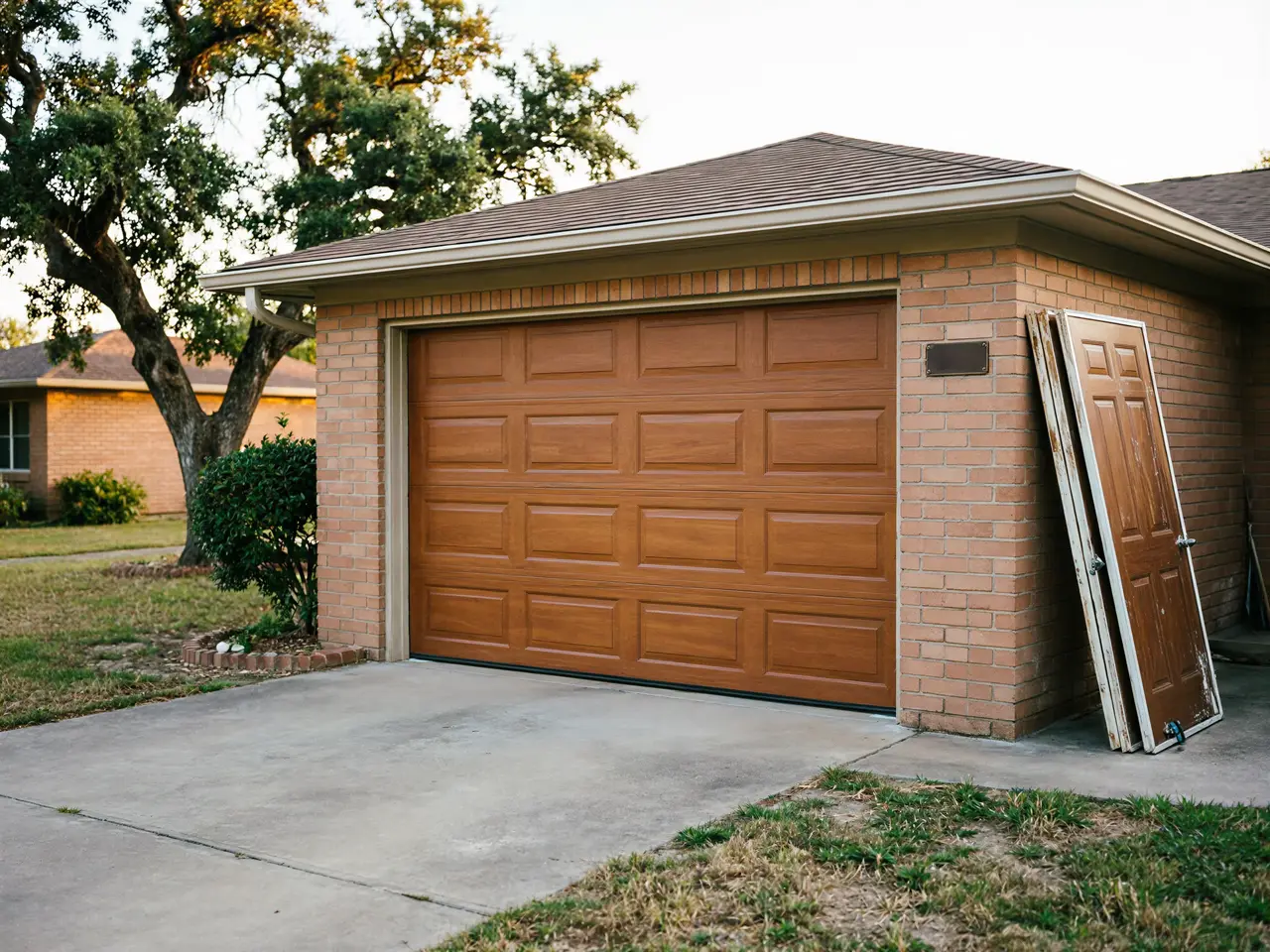
Malvern's housing stock centers on 1969, a full 18 years older than the 1987 median across the wider service area we cover out of Hot Springs. That matters for what's actually on the house right now. A lot of these openings still carry the original single-layer steel or wood-panel door from the build, paired with whatever torsion or extension spring setup the builder spec'd at the time. When we quote a new install here, we're not guessing at a generic 7x16 double door - we're measuring an opening that was likely framed before insulated steel sectional doors were the default choice, which changes track clearance and header room on more jobs than you'd expect. We carry insulated steel sectional doors in standard sizes, along with the torsion hardware, tracks, and openers to match. We don't stock custom wood doors or oversized commercial sections - those are special-order items with a lead time, and we'll tell you that up front rather than quote a date we can't hit. For the houses on original framing, expect a conversation about header depth before a price.
Where This Job Goes Sideways
The failure point on a 1969-era opening isn't usually the door itself - it's what's behind the trim. Jamb wood that's been painted over a dozen times can look solid and still be too soft to hold new track brackets. We've seen it go sideways when a crew bolts a new door to old jamb material that doesn't actually grip the lag screws anymore, and the first hard wind test pulls the whole track loose. On a house this age, we check the jamb before we order the door, not after. The other place it goes wrong is headroom: original framing in this era sometimes left less clearance above the opening than current torsion spring setups want, which means a low-headroom conversion kit instead of the standard hardware - a real cost difference that needs to be priced before the install, not discovered during it.
Why This Fails Locally
Pair a 1969 build year with a cold-moderate climate and you get a specific kind of failure: steel that's been through fifty-plus winters of expansion and contraction on hardware that was never upgraded. Add in that median household income here runs $40,602, noticeably below the service area's $61,452, and you get a town where a lot of owners have been deferring a full install in favor of patch repairs on a door that's long past the point where patching makes sense. That's not a knock - it's just the math of 3,451 households deciding where a repair bill fits against everything else. The upshot is that when a new install does happen here, it's often replacing a door that failed outright rather than one swapped out ahead of trouble, which means more jamb and track damage to clean up as part of the same job.
The Symptom
If you're calling about new installation rather than repair, the door usually already told you it's done: a panel that's buckled or rusted through at the bottom seam, a spring that's broken for the second or third time on the same door, or an opener straining against a door that's gotten heavier with warped wood over the decades. On the 1969-era stock common here, the giveaway is often a door that still looks presentable from the driveway but binds hard on the track and won't seal flush at the bottom - foam weatherstripping that's shrunk, a bottom panel that's sagged out of square, hardware mismatched from one too many prior repairs. That combination is usually the point where installing new costs less over time than chasing another round of parts for a door this old.
The Cost of This Job
We travel from Hot Springs to Malvern for this work - it's about 15 miles each way, and that's part of any quote since there's no branch location here. Pricing on a new install depends on door size, insulation, and whether the opening needs a low-headroom kit or jamb repair first, which is common enough on houses from this era that we check for it before giving a number. We won't quote a flat price sight unseen for a 1969-era opening, because the jamb condition genuinely changes the job. What we can tell you is that a straightforward swap on sound framing costs less than one that needs jamb or header work first, and we'll separate those two numbers clearly so you know which one you're paying for.
Frequently asked questions
How far out is Malvern from your shop?
About 15 miles from Hot Springs. We don't keep a branch or depot in Malvern, so travel is built into the quote rather than tacked on as a surprise fee.
Will a new door fit my old 1960s opening without extra work?
Often, but not always. A lot of Malvern houses date to 1969, built before today's insulated sectional doors and low-headroom torsion kits were standard. We check jamb condition and header clearance before quoting, since that's where extra cost usually shows up on a house this age.
Can you match the original wood-panel look?
We don't stock custom wood doors - those are special-order with a real lead time, and we'll say so rather than promise a date we can't keep. Insulated steel doors in a panel style close to the original are what we carry on the truck.
Is it cheaper to repair my old door than replace it?
Depends on what's failing. A door that's rusted through at the bottom or on its second broken spring is usually past the point where another repair makes sense. We'll tell you plainly if a repair is the better call before pushing a new install.
Book garage door service in Hot Springs
Call now or request a quote - tell us what the door is doing and where you are.